Sponsored article
What Determines the Durability of Drinks Trays in Intensive Hospitality Use?
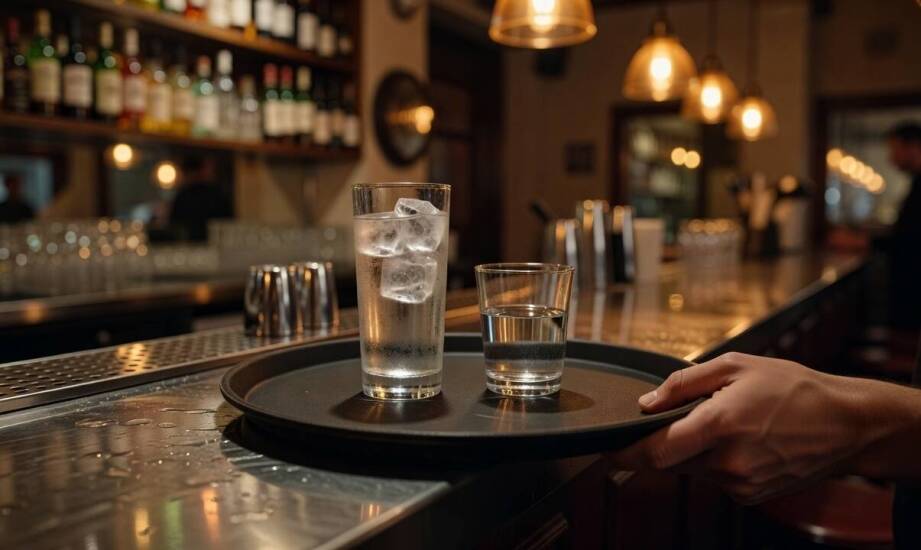
In a busy hospitality environment, a drinks tray needs to keep glasses and cups stable despite moisture, repeated handling and the fast pace of service. Designing professional serving equipment therefore requires careful consideration of the loads and conditions encountered during everyday work.
Material selection, tray geometry and surface design all influence how reliably the product performs. A well-designed tray needs to balance manageable weight with sufficient stiffness while remaining comfortable for staff to handle repeatedly.
Which Material Properties Matter in Bar Trays?
The performance of a bar tray depends on the complete material system rather than on one polymer property.
Noex offers models made from combinations such as polystyrene with PU or TPE anti-slip surfaces. These materials fulfil different functions: the structural part provides the required shape and stiffness, while the surface layer improves grip.
For hospitality applications, relevant material properties include:
stiffness;
impact resistance;
dimensional stability;
moisture resistance;
surface durability;
compatibility with the intended cleaning method.
The tray needs to remain sufficiently rigid when carrying several glasses or bottles. Excessive bending can make the load more difficult to control, particularly when tall glasses are positioned away from the centre.
At the same time, the material and surface should be suitable for repeated contact with spilled drinks and normal cleaning during everyday service.
Why Is an Anti-Slip Surface Important?
Surface grip is one of the most important functional features of a professional drinks tray.
A dedicated anti-slip layer increases friction between the tray and the base of a glass or bottle, reducing unwanted movement during transport.
Noex offers trays with PU and TPE anti-slip surfaces in several shapes and sizes. The appropriate solution depends on the required tray dimensions, expected load and operating environment.
The rim and overall geometry can also contribute to handling and structural stiffness.
However, an anti-slip surface does not remove the need for careful use. Its purpose is to improve stability rather than guarantee that a glass can never move or tip over.
Why Does Injection Moulding Matter?
Injection moulding makes it possible to manufacture complex tray geometries with a high level of repeatability in series production.
Once the mould and process parameters have been properly developed, elements such as the rim, base geometry and surface details can be reproduced consistently across a production run.
This is particularly important for large B2B orders where dimensions, fit and visual appearance need to remain controlled.
A dedicated injection mould also gives designers considerable freedom when developing the shape of the tray.
Wall thickness, reinforcing features and transitions between different areas can be adapted to the expected mechanical loads.
Correct mould design and processing conditions help reduce the risk of problems such as excessive deformation, sink marks or internal stresses, although they cannot eliminate every possible production defect.
How Are Promotional Drinks Trays Used in Hospitality?
In bars, restaurants, hotels and event venues, promotional drinks trays combine two functions.
First, they provide staff with a practical surface for carrying drinks.
Second, they act as a visible advertising medium directly at the point where customers are served.
A stable tray design helps staff control the load during movement between tables, while an anti-slip surface can reduce glass movement caused by acceleration, turns or minor changes in tray angle.
The final performance depends on several elements working together: tray size, stiffness, surface grip, load distribution and the way the tray is handled.
How Is Branding Applied to a Promotional Tray?
A promotional tray needs to maintain its practical function while also presenting the brand clearly.
Noex offers different customization methods depending on the model and project, including full-colour graphics, screen printing and UV printing. Individual tray designs can also incorporate printed labels.
The appropriate method depends on the tray construction, surface and expected use.
A professionally protected print can provide good resistance to normal abrasion, moisture and standard cleaning conditions.
It is better, however, to evaluate print durability for the selected model rather than assume that every printing method will perform identically under all cleaning conditions.
Branding should also be positioned so that it does not interfere with the functional working surface of the tray.
How Should Promotional Trays Be Cleaned?
Cleaning requirements need to be checked for the specific tray model.
Different material combinations and anti-slip surfaces may have different limits regarding:
water temperature;
detergents;
mechanical scrubbing;
dishwasher use.
This is especially important for trays with soft PU or TPE working surfaces.
Although many professional serving trays are designed for repeated hospitality use, individual product instructions take priority over general assumptions about dishwasher resistance.
For some Noex anti-slip products, the current care instructions specify washing at water temperatures not exceeding 35°C, without detergents or abrasive cleaning.
Following the manufacturer’s instructions helps protect both the functional surface and the printed decoration.
Can Recycled Materials Be Used for Drinks Trays?
Recycled plastics are increasingly used in promotional products, including serving trays.
Their suitability depends on the required mechanical properties, surface quality and processing stability of the specific recycled grade.
Recycled content should therefore not be treated as either an automatic technical disadvantage or a guarantee of environmental performance.
A recycled polymer can be a suitable choice when it provides the required:
stiffness;
strength;
dimensional stability;
surface quality;
processing repeatability.
Using recycled material can also reduce demand for virgin polymer where the recycled grade successfully replaces it.
Noex offers both conventional and recycled promotional trays and combines injection moulding with its own tooling and product-development capabilities.
This allows material, mould design, surface solution and branding to be considered together when developing a product for B2B customers.
The durability of a professional drinks tray ultimately depends on how well these elements are matched.
Material properties, structural design, anti-slip performance, printing technology and appropriate cleaning conditions need to work as one system if the tray is expected to perform reliably in everyday hospitality use.
You might be interested
Durable Industrial Entrance Mats—What Features Ensure Their Longevity?
How to Match the Capacity of a Roaster to the Needs of Your Coffee Roastery?
How can a fruit and vegetable supplier help create unique flavors?